Poskraft

Resources

Cardboard Design Resources, DIY Projects & Display Ideas

Cardboard Design Resources offer a general overview of the key elements in cardboard design, including tabs, folds, flutes, and structural components. This guide highlights how these features work together to create strong, functional, and efficient cardboard structures, helping you understand the basics of designing and assembling effective packaging solutions.

Corrugated Cardboard

Cardboard delivers versatile, lightweight performance across packaging, displays, and product protection. By adjusting its structure and composition, you can tailor it for greater strength, better appearance, and improved sustainability. As you explore its features, you’ll quickly see what makes cardboard so effective.

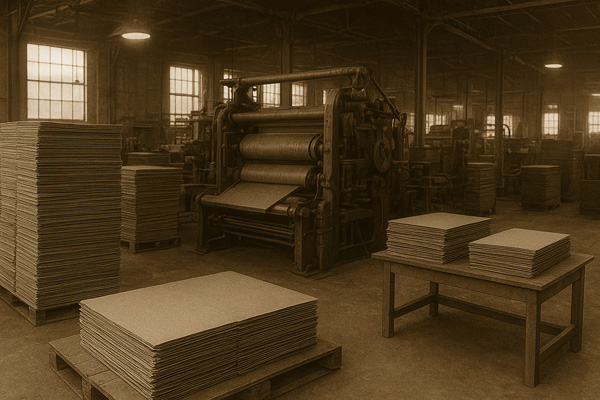
Cardboard design resources - factory

Flute types

Not all corrugated cardboard is the same. The size and shape of the internal flutes affect strength, weight, and surface finish. Here’s a quick look at how it’s made:

Paper Preparation

Cardboard starts as kraft or recycled paper, which is pulped, dried, and rolled into large sheets.

Corrugating the Medium

The middle layer, called the medium, is passed through corrugating rollers to form the wavy flutes.

Adhesive Application

Starch-based glue is applied to the peaks of the flutes to bond them to flat linerboards.

Lining

One or two flat sheets (liners) are pressed onto the fluted medium, forming single-face, single-wall, or double-wall board.

Drying and Cooling

The glued board passes through heated plates to cure the adhesive and stabilise the structure.

Cutting and Finishing

The board is trimmed, cut to size, and scored for folding into boxes, sheets, or other packaging.

Cardboard design resources - a flute cardboard

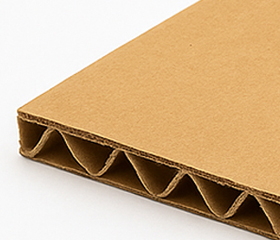
A-Flute

Thick flute with excellent cushioning and stacking strength. Good for fragile items.

b flute cardboard

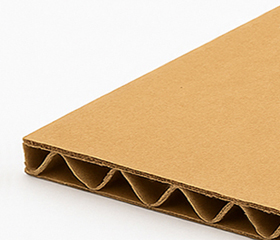
B-Flute

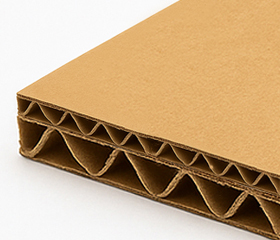
Medium flute commonly used for die-cut boxes and displays.

c flute cardboard

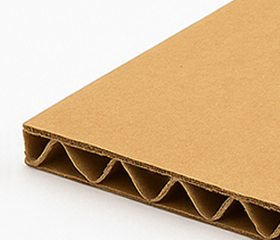
C-Flute

Most common flute type, used in standard shipping boxes. Good strength and printability.

e flute cardboard

E-Flute

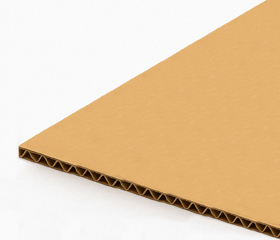
Thin flute ideal for retail packaging needing fine printing detail

eb flute cardboard

EB-Flute

Most common flute type, used in standard shipping boxes. Good strength and printability.

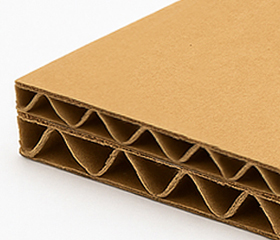
bc-flute cardboard

BC-Flute

BC flute corrugated board; strong yet lightweight, ideal for boxes and shipping cartons.

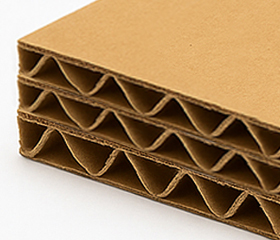
Tri-Wall cardboard

Tri-Wall

Ultra-strong, triple-layer cardboard engineered for heavy-duty protective packaging.
single face cardboard

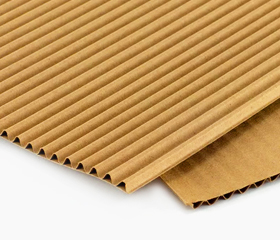
Single-face

Single-face corrugated board with one liner; best for wrapping, cushioning, and lightweight packaging protection.
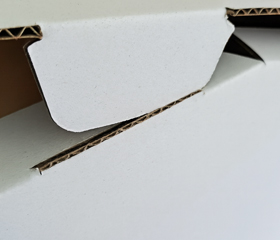
Engineering the Right Board Grade for Every Project

Poskraft brings decades of structural and design-engineering expertise to every board grade, delivering direct value to our clients. Our team actively matches the right flute profile and board grade—ranging from single-wall to double-wall and specialty flutes—to achieve the ideal balance of cost, strength, and weight.

Through our custom packaging evaluations, we ensure materials are not over-specified. If a project is using a heavier board than necessary, we recommend smarter, more efficient alternatives without compromising performance.
Within our design consultancy, we always factor in board grade performance, ensuring that every retail display, insert, or packaging solution we create meets both structural demands and visual quality.

Tabs & Structural Components

Tabs and structural components actively shape how a cardboard design locks together, carries weight, and maintains its form. As you explore these features, you’ll see how each one improves overall strength, stability, and functionality.

Cardboard design resources - tabs

Fold Tabs

Fold tabs are designed to bend and tuck into slots or against surfaces, reinforcing edges or corners. They help shape, strengthen, and stabilise boxes without glue.
Cardboard design resources- locking tab

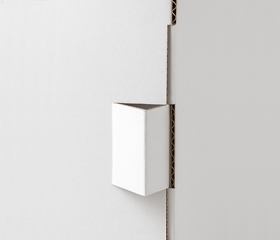
Locking Tabs

These tabs are small extensions that fit into slots to secure edges without glue. They hold flaps in place, and allow easy assembly and disassembly.
Cardboard design resources- cardboard gusset

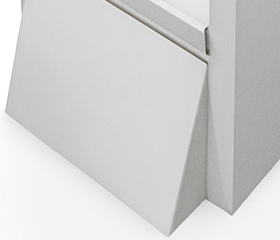
Gussets & Supports

Internal triangular structures that improve rigidity and allow clean folding behaviour.
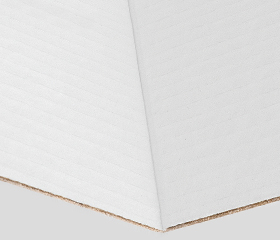
Cardboard design resources - fold

Fold Lines / Creases

Scored areas allowing precise bending without cracking the cardboard surface.
Engineering Stronger Tabs & Structural Components

At Poskraft, we use our structural engineering expertise to ensure every tab, lock, and support component performs exactly as intended. We design locking systems that assemble smoothly, hold firmly, and maintain their integrity even with repeated use. As we refine each design, we optimise internal supports, braces, and connection points for maximum strength without adding excess material. By prototyping and stress-testing every structural element, we fine-tune performance for weight-bearing, stacking, transport, and demanding retail environments.

Whether it’s a complex POS display or a simple packaging insert, we ensure every structural element is purpose-built, reliable, and efficient.

Visit our store at https://poskraft.store to explore our ready-for-manufacture, tried-and-tested dielines.


Material Variants

Cardboard comes in a range of material variations, each offering different levels of strength, finish, and sustainability. Here’s a quick overview of the most common options and what they’re best suited for.

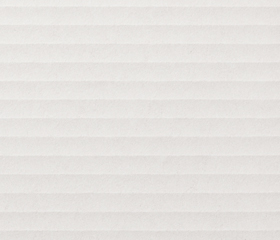
white cardboard

White Cardboard

Ideal for premium packaging and print-focused designs.
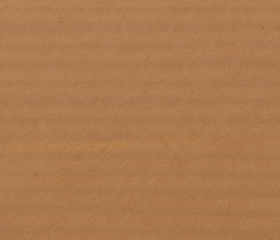
Cardboard design resources

Kraft / Brown Cardboard

Eco-friendly and strong, commonly used for shipping and rustic branding.

Contact our cardboard engineer to discuss your needs.

Submit a quote request and we’ll get back to you in less than 3hrs!